
Checking In On The Hudson Valley Mall
By Jesse Smith for Ulster Strong
Walking through the Hudson Valley Mall on a Friday afternoon can be a disorienting experience for anyone who recalls the days when it was a bustling retail hub. These days the cavernous interior of the 760,000 square foot space features long stretches of decorative murals depicting local history and attractions, interspersed with vacant storefronts. A handful of businesses, none of them strictly retail, survive.
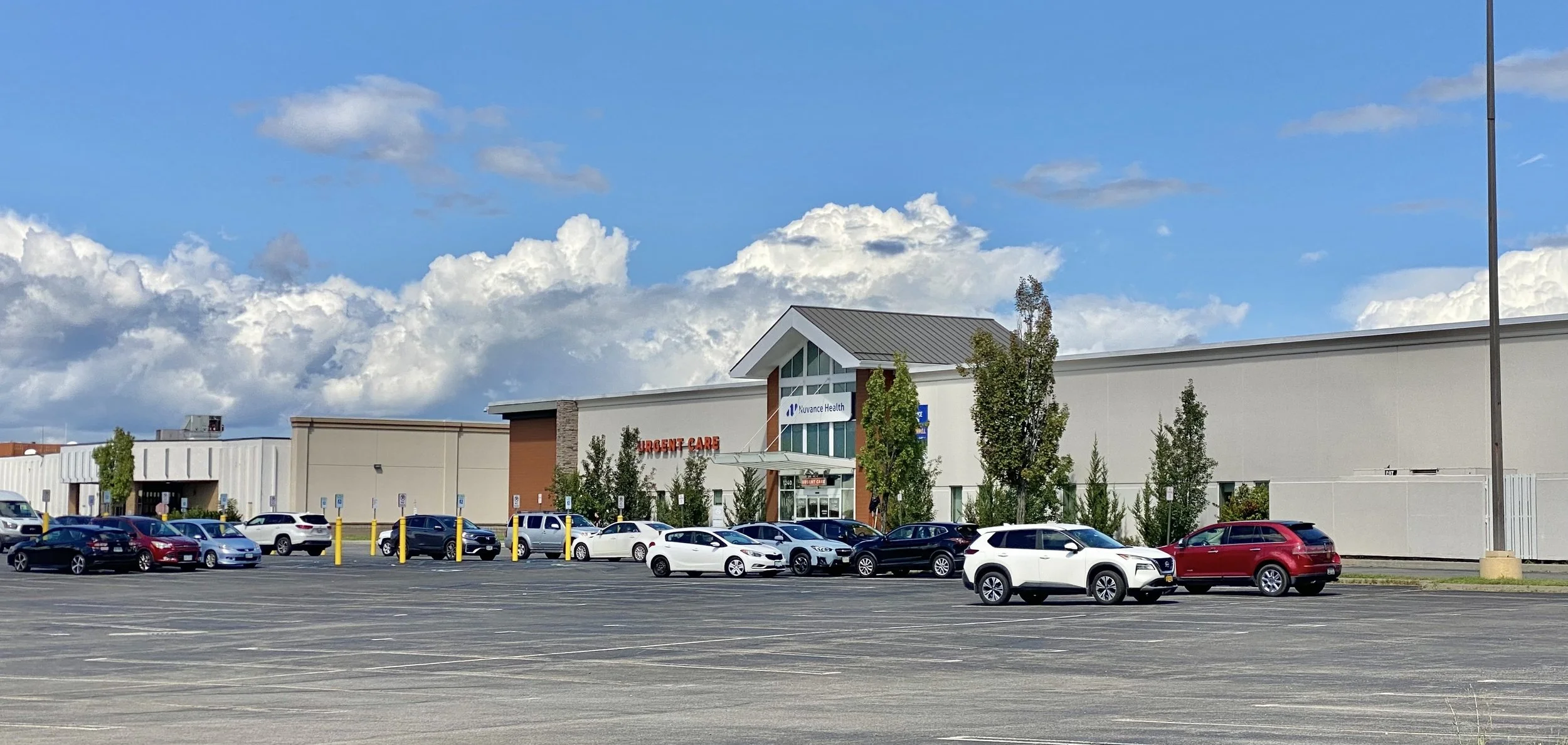
The NGC Cinema multiplex, a Target outlet, and a Nuvance healthcare facility are the only anchors today. The interior retail space features a children’s parkour gym, and adult fitness center, a bust unisex hair salon, and a Boy Scouts of America store, and that’s about it. Rather than shoppers, the people strolling the long, carpeted corridors are mall walkers who have adopted the space as an all-weather alternative to the track at Dietz stadium.
What was once a premiere shopping destination, not to mention perhaps the single largest taxpayer in the Town of Ulster is now a quintessential “dead mall.” And while some might look at it and feel pity for whoever owns- and must pay taxes-on this zombie shopping center, for John Mulherin and the team at Hull Property Group, everything is going according to plan.
“I tell folks all the time - remember 1982 when you’d go to the mall with your girlfriend and it was full and you’re wearing your members only jacket and you go to the arcade and play the Galaga machine and blah, blah, blah?” said Mulherin, Senior VP for Governmental Relations at the Augusta, Georgia-based commercial real estate firm. “Well, you can forget it because the nostalgia years are not coming back; the future of the mall is not going to be the retail of the past.”
In the world of commercial real estate, enclosed malls are rated like term papers. At the top, “A malls” in major metropolitan areas are anchored by high-end retailers like Sax Fifth Avenue and filled with luxury brands like Louis Vuitton and Tiffanys. At the other end of the scale “F Malls” - abandoned hulks whose only conceivable investment is demolition. Hull Property Group owns and operates 38 enclosed malls in 18 states. The company’s wheelhouse are “D Malls” - shopping centers stripped of the anchor stores that generate the foot traffic needed to attract smaller retailers but just viable enough to justify paying the taxes and keeping the lights on.
There are just a handful of companies operating in the D Mall space. Most of them get by with aiming at the bottom of the retail food chain - think discount smoke shops and liquidation outlets - where they keep the overhead low enough to offer rock bottom rents. But Hull takes a different approach. Mulherin said the key the company’s redevelopment model was a three-step process; stabilize, transform and reposition.
“You’ve got to stabilize the way it looks and feels, you’ve got to transform the way it looks and feels and then you wait for the opportunity,” said Mulherin. “We’ve done the first and second things, and I think the Hudson Valley Mall represents probably the largest redevelopment opportunity on 9W where there’s really not a lot of space for redevelopment.”
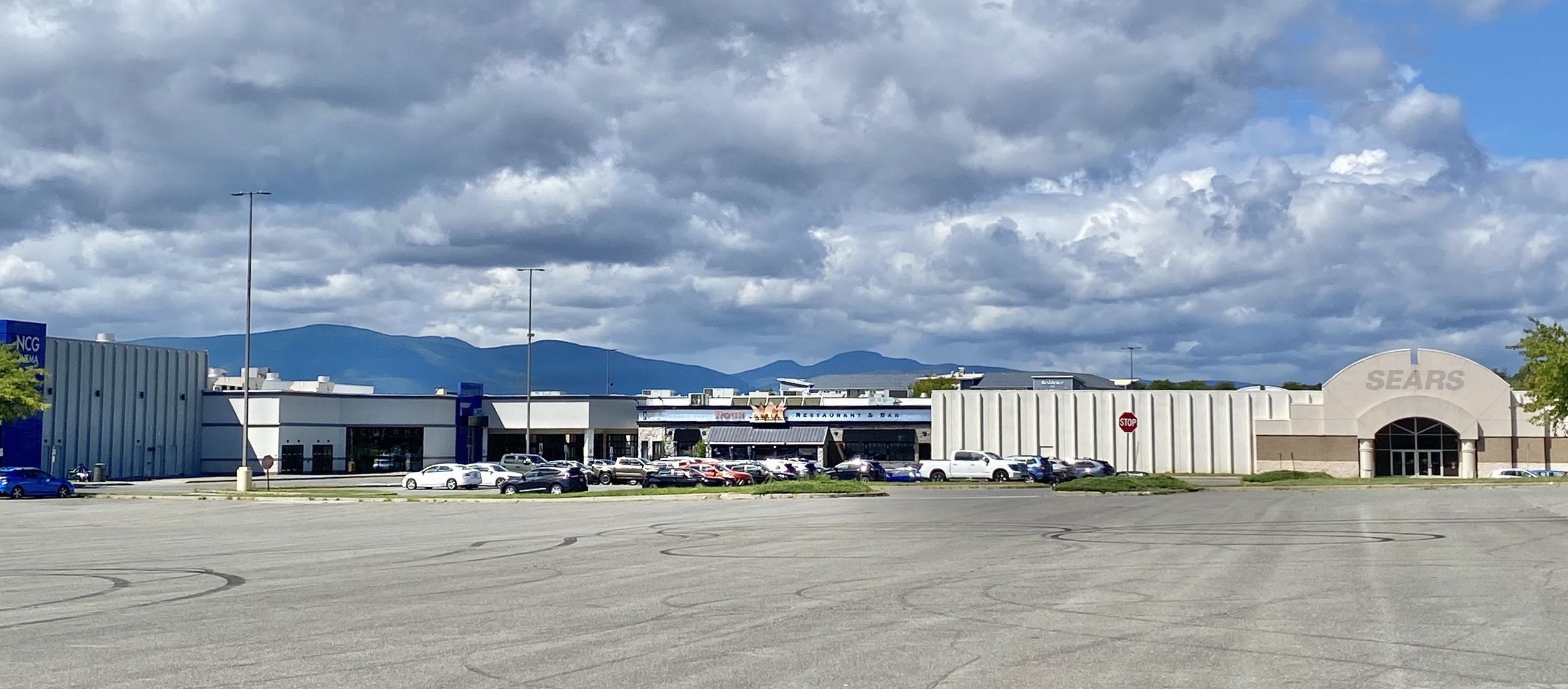
The company’s approach was evident back in 2017 when they purchased the mall out of bankruptcy for $8.1 million. The acquisition came at the height of what came to be known as the Great Retail Apocalypse, and a period of wrenching realignment as big box chain stores came face to face with the reality of online retail.
In 2017 alone, 35 major retailers, including longtime shopping mall staples like Payless, The Limited and Toys R Us went into bankruptcy. Enclosed malls have always relied on the synergy between big box anchors, smaller retailers and food and entertainment businesses. The departure of anchor stores like J.C. Penny and Macy’s from the Hudson Valley Mall put such a dent in foot traffic that it no longer made sense for smaller retailers to remain.
Local developer Joe Deegan said a major factor in the demise of the enclosed mall concept were the costs associated with common areas, like food courts and spacious hallways. Mall tenants were willing to pay higher rents to maintain those common spaces when anchor stores were generating high-volume foot traffic. But once the anchor chains failed and foot traffic declined, retailers fled enclosed malls for front facing shopping centers where they only had to pay for space they could actually use.
“You’re paying to heat, cool light and maintain these huge common areas” said Deegan who specializes in commercial real estate. “And when you move to a front facing mall, that all goes away.”
Hull’s stabilization effort included reaching a tax agreement with the town of Ulster that lowered the mall’s assessment from $66 million to $8.1 million and a guarantee that the town would not raise the assessed value for at least five years. The deal also required local taxing entities to refund Hull for $1.4 million in overcharges based on the previous assessment.
According to Town of Ulster Supervisor Jim Quigley, the tax deal helped staunch the bleeding of capital from the mall and fulfill Hull's stabilization strategy. But the “disappearance of some $60 million from the town's tax rolls was a bitter pill for town officials”, and represented the final act in the slow decline of what had once been a steady and reliable source of millions in municipal revenue. "The mall went from being a significant driver of revenue to a tip," said Quigley who helped negotiate the 2017 agreement.
The transformation phase saw Hull bring in NGC Cinemas which invested heavily in upgrading the former Regal Cinemas with more comfortable reclining seats and other modern amenities. Hull itself invested $1 million to plaster over vacant storefronts and put up the decorative murals. The facelift, Mulherin said, was intended to stave off the sense of doom and failure that had taken hold at the mall.
Now, Mulherin said, the company is just waiting for the right opportunity. What that opportunity could be remains to be seen, but Hull’s work around the country illustrates the range of possibilities. The opportunity can be as simple as getting lucky and landing a big box anchor tenant to restore the economic logic of the mall, or as complex as complete demolition and rebuilding for an entirely new purpose.
In the past Hull has transformed malls into family entertainment centers, front-facing shopping plazas and various combinations of residential, commercial and office mixed use. In Texas the company even developed a plan to turn an enclosed mall into a continuum of care community with bungalows for retirees in the former parking lot, and assisted living and nursing care on the interior, while maintaining the food court and some retail to serve customers needs. Mulherin said Hull’s status as a privately held company, with no shareholders demanding returns, allows it to play a long game.
It’s a disciplined approach, it requires patience and it is completely market driven,” said Mulherin. “You’re not just looking for an opportunity, it has to be the right opportunity.”
Deegan, who became acquainted with Hull and its strategy when they first acquired the mall said that he believed the company was on the right track in remaining patient and avoiding the “race to the bottom” that often takes place a dead-malls.
“There’s always a temptation to grab another dollar by taking on whatever C-credit tenant comes along just to live another day,” said Deegan. “But you’re really just delaying your own demise.”
Deegan agreed with Mulherin that the Hudson Valley Mall’s days as a one-stop-shopping mecca are come and gone. Compared with communities like Albany, which has the thriving Crossgates Mall, Ulster County lacks both the population and disposable income to support the old model. But, he said he believed the site itself, with its stunning views of the Catskill Mountains and proximity to a major commercial strip was ripe for redevelopment into some type of mixed use.
“It may be a dead mall, but it’s not dead real estate,” said Deegan. “I think in ten years people are going to look at it and say ‘look what they did there.”